Why impact analysis has become essential for investment projects
Impact analysis is rapidly becoming a non‑negotiable requirement for investment projects. Strategy & Execution Director Javier Nieto explores why measuring economic and social value now sits at the heart of strategic decision‑making.
Measuring the economic and social impact of investment projects has become a critical requirement across industries and a growing demand from public administrations in many regions. This shift reflects a broader evolution in the Social Contract between companies, governments, and society.
Businesses are expected not only to generate profit but also to contribute meaningfully to the communities in which they operate. Leveraging its expertise and structured methodology, Metyis’ Social Impact team supports utility companies in meeting this challenge—helping them assess, quantify, and communicate the value their investment projects generate.
Companies are increasingly aware of the influence their projects exert on the geographical areas in which they operate. Larger organisations often establish dedicated sustainability departments to evaluate both the social and environmental implications of their initiatives. This aligns with a renewed understanding of the Social Contract, where corporate responsibility extends beyond compliance to include active participation in social and territorial development.
At the same time, public authorities and institutions are integrating impact-based criteria into project tenders, requiring companies to demonstrate the broader value of their investments. Sustainability considerations are gaining prominence—not only for businesses but also for public administrations—making it essential to evaluate the economic and social impacts that new projects generate within their territories. This becomes especially critical for large-scale projects, where the magnitude of investment is closely tied to significant economic, social, and environmental consequences.
The objective is to understand how a project affects the territory in economic terms (such as Gross Value Added and tax revenue), social terms (including employment generation), and the development of local value chains.
Utility and large infrastructure investment projects
Large‑scale utility and infrastructure initiatives have wide‑ranging territorial effects. Understanding their economic, social, and environmental implications is essential for ensuring responsible development and informed decision‑making.

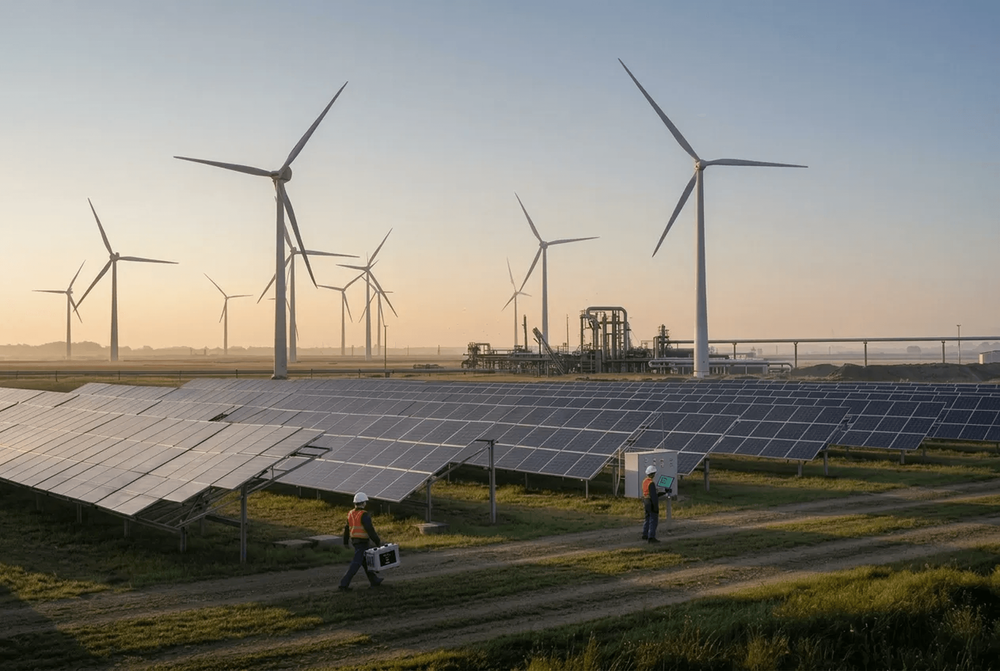
Energy transition projects
- Closure of coal-fired or nuclear power plants.
- Development of wind farms, photovoltaic, solar thermal, hydrogen and biomass plants.

Water management infrastructures
- Water management infrastructures, pipelines, desalination projects, etc.

Gas Projects
- Gas transport infrastructures, storage, regasification, etc.

Communication infrastructures
- Construction and maintenance of transport routes (motorways, maritime canals, transport, etc.)
The growing importance of territorial impact and territorial support plans
Public authorities are increasingly requiring companies to report on both the quantitative and qualitative impacts of their investment and divestment projects. In public tenders related to the just transition and access to electricity grid demand, impact assessments have become a fundamental requirement, alongside the proposal of accompanying plans. In many cases, proposals for job creation and measures to compensate and support local stakeholders in the territories are key factors in determining the success of these bids.
This growing regulation is now extending to regional levels. Some authorities are imposing increasingly stringent requirements to ensure that new projects implemented in their territories generate tangible benefits. It includes improvements in employment, environmental protection, and support for local communities.
These measures reflect a broader commitment to responsible development. In this approach, the social and economic impacts of investments are considered just as important as their financial returns.
As an example, the government of the Galicia region in northwest Spain recently approved a pioneering regulation in the country—Law 2/2024—which governs projects that utilise natural resources in Galicia, including energy, water, and mining initiatives. The law introduces a requirement for such projects to generate measurable social and economic benefits for the territories in which they are implemented, setting a benchmark for responsible and impact-driven development.
How do projects impact in a territory?
Both investment and divestment projects can have significant and multifaceted impacts on the territories in which they operate. These effects extend beyond the immediate financial aspects, influencing local employment, environmental conditions, and the performance and opportunities of companies within the value chains associated with the activity.
Understanding these impacts is essential for stakeholders to design strategies that not only maximise the positive outcomes — such as job creation, sustainable resource use, and local economic growth — but also mitigate potential negative consequences for communities, ecosystems, and regional development.

Economy in the area
- Gross Value Added (GVA): Any investment or divestment Project has an impact in the GVD of the area where it operates. This direct, indirect, and inducted economic impact can be measured at local, regional and national levels.
- Tax collection: Municipalities and regional governments are positively or negatively impacted by the tax revenue associated with the investment of divestment Project.

- Employment rates: The impact of the project on employment rates can be measured at a local, regional and national level.
- Direct employment: Generated or lost by the promoter company and its direct suppliers
- Indirect employment: Generated or lost by second level companies
- Induced employment: Generated or lost in other companies benefited from the consumption of direct and indirect employees.

Value chain
- Supplier companies: Local suppliers in the area of influence of the project are also affected by the loss or generation of activity caused by the start-up or cessation of the project.

Environment
- Impact on the natural environment, including soil, aquifers, local fauna and flora, and the visual landscape.
Impact studies and socio-economic development plans on utilities projects
Metyis employs a proven methodology to develop socio-economic and impact assessments for the implementation of utilities investment projects. By analysing the area of influence, we can identify how the project impacts the local territory and, based on these insights, design an action plan to mitigate potential negative impacts. This approach enables the Creating of Shared Value, ensuring that projects generate measurable social, economic, and environmental benefits for the communities and regions in which they are deployed.
Definition of the area of influence
Defining the area of influence (municipalities directly affected by the project) is the first step in identifying the scope of impact.

Economy in the area:
An overview of the socio-economic situation of the area: population, employment rates, economic sectors overview, local services, etc. is necessary in order to understand the starting point, needs and sensitivities specific to the area.

Analysis of socio-economic impact:
This involves the quantitative and objective measurement of the project's impact in terms of:
- GVA lost or generated
- Tax revenue generated or lost
- Employment generated or lost with the project.

Value chain impact analysis:
Identification of local suppliers of goods and services that may participate in the construction or operation of the investment project and quantification of their local impact in terms of wealth creation and job generation.

Sensitivity analysis of local agents:
Local institutions, associations, chambers of commerce and other local agents can have a major influence in the development of the project.
It is essential to understand who are the main local agents in the territory, what degree of influence they have and what is their position on the development of the project:
- Identification of stakeholders, local needs and social development initiatives
- Interviews with local agents and organisation of informative sessions
- Sensitivity analysis of agent’s position in relation to the project
- Proposal of measures to mitigate social impacts of the project.

Success cases in energy sector
Over the past three years, we have collaborated on more than 40 renewable energy investment projects across different regions, working with a wide range of utility companies. Our teams bring extensive experience in photovoltaic, wind, hydrogen, biomethane, and reversible hydropower projects, positioning us as a trusted partner in advancing the energy transition.
We have collaborated with many of the leading companies in the energy sector and in the current context of energy transition, it has become essential to understand the territorial impact of both the projects that are winding down—such as the closure of coal-fired or nuclear power plants—and the new investment projects in renewable energy, including photovoltaic, wind, hydrogen, biogas, and pumped-storage hydropower. Assessing these impacts allows stakeholders to anticipate economic, social, and environmental consequences, ensuring that the energy transition is managed in a sustainable and inclusive manner for the communities involved.
The impact analysis of utility projects at Metyis
We combine the technical skills of our teams that specialise in impact measurement and the design of accompanying social plans with our knowledge of local markets. This gives us the ability to carry out impact studies based on widely accepted methodologies such as the Input/Output approach, and to apply them in any country.
Our capillarity is another essential part of this work. With more than 1,000 professionals across 17 offices in 11 countries, we can support our clients locally and globally. Over the past few years, Metyis has accumulated significant experience in managing impact projects for top companies, in different territories and across different project types.
As expectations around transparency and territorial development continue to grow, understanding the economic and social footprint of an investment or divestment project has become fundamental. This means looking beyond financial returns and considering GVA, tax revenue, employment, the value chain, and environmental conditions in the area. It also means ensuring the creation of shared value for the territories where projects are implemented.
This is why our work focuses on analysing the area of influence, identifying local needs, and anticipating the sensitivity of different agents. By doing this, we can propose measures that help mitigate potential negative impacts and strengthen the relationship between the project and the territory. The result is a clear and objective view of the project’s contribution in terms of measurable social, economic, and environmental benefits.
At Metyis, our tools, expertise, and capillarity allow us to support companies facing increasingly demanding requirements from public administrations regarding socio‑economic impact. Our role is to help organisations understand how their projects affect the territory and ensure that this understanding is transformed into action and shared value.
Javier Nieto is a Strategy & Execution Director based in Madrid.